AEM at the Core: A Closer Look at the Enapter Stack 25
Scaling hydrogen production from smaller systems to industrial plants starts with the core technology.
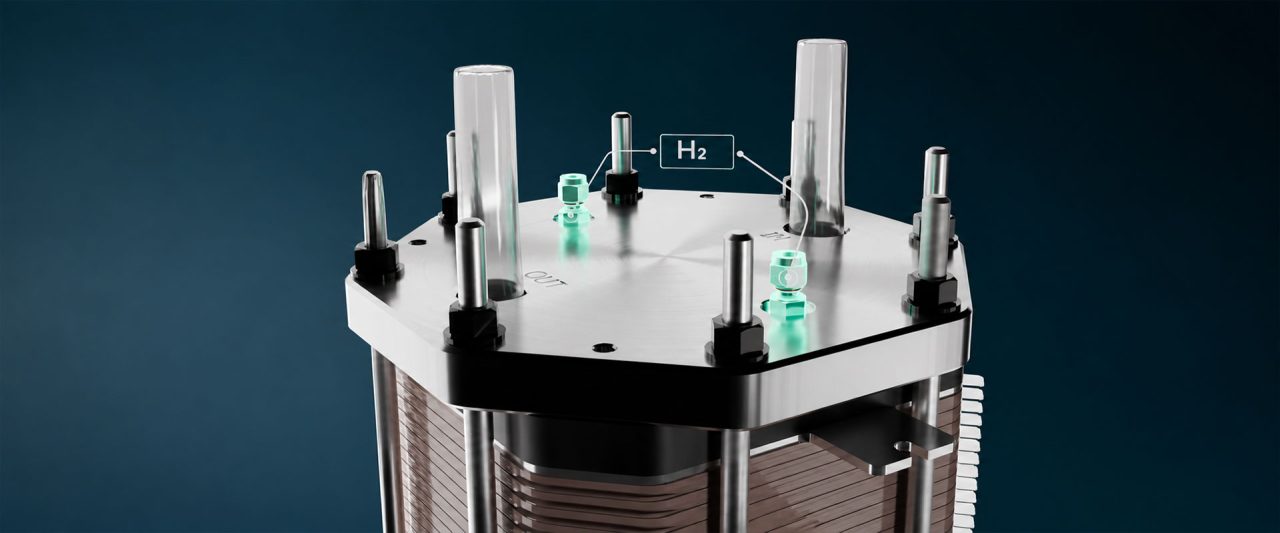
The Enapter Stack 25 is the AEM stack at the heart of Enapter’s modular electrolyzer systems. Our new product animation provides a closer look at the stack itself, including its key process interfaces for water, oxygen and hydrogen.
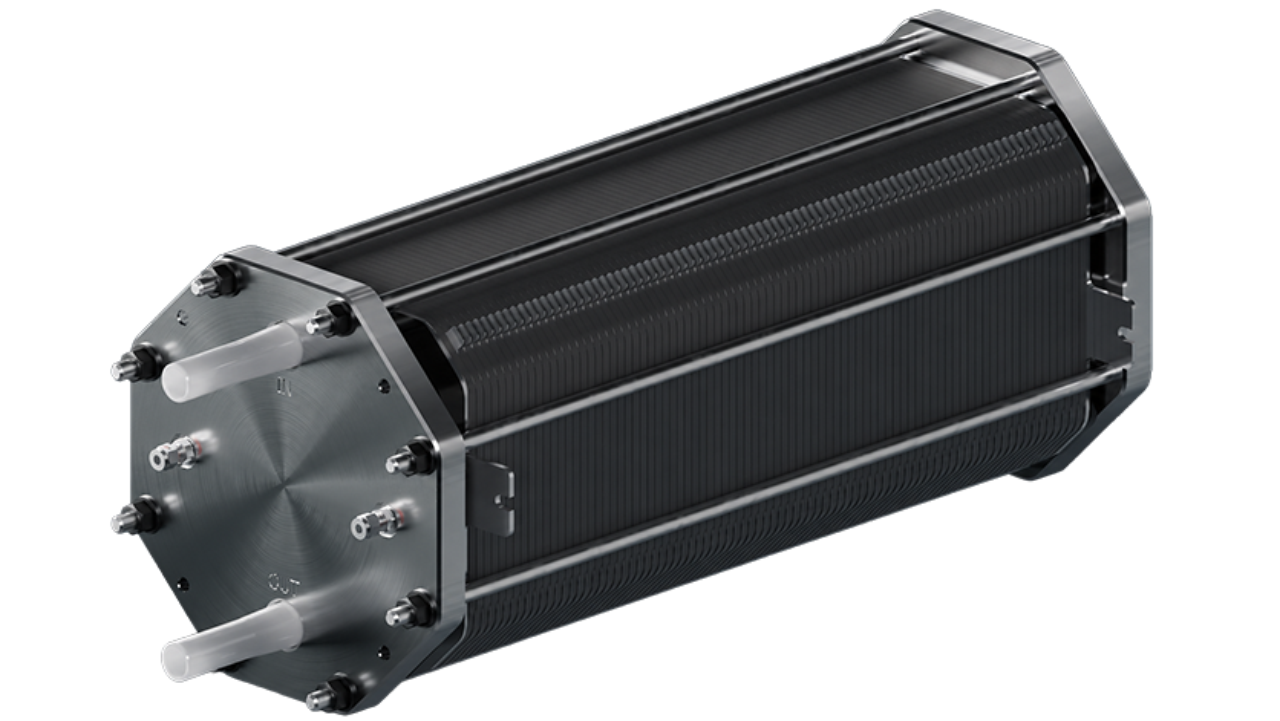
One core technology. Multiple scales.
Across Enapter’s portfolio, the same modular AEM approach supports hydrogen production from 24.1 Nm³/h with the AEM Flex 120 to 491.6 Nm³/h with the AEM Nexus 2500.
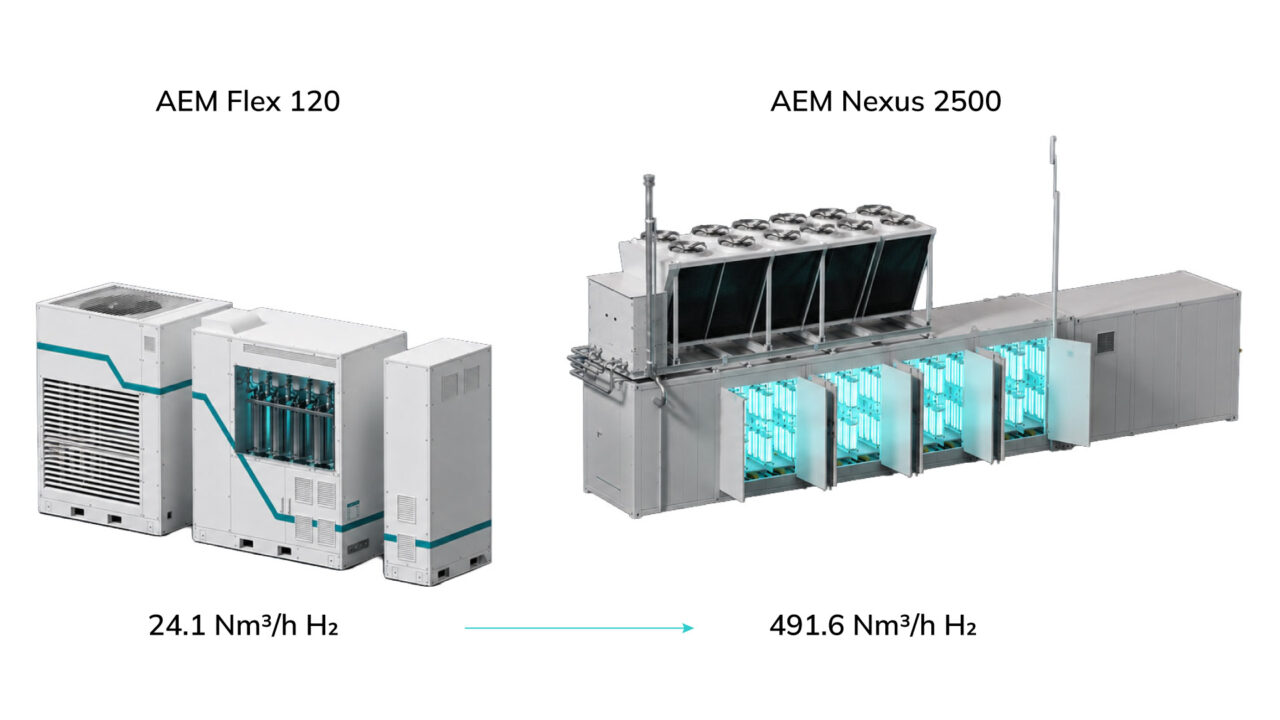
As production requirements increase, the system architecture develops with them. Multiple stacks can be integrated with balance-of-plant components and intelligent control to create larger hydrogen production systems.
Designed for renewable energy systems
Scalability is only one part of the equation. Hydrogen production also needs to operate within the conditions of the wider energy system.
AEM technology combines modularity with flexible operation, fast response and short start-up times. These characteristics support integration with variable renewable energy, allowing hydrogen production to respond as available power changes.
At larger scales, modularity also becomes a system design principle: hydrogen production, balance of plant and control need to work together as one integrated architecture.
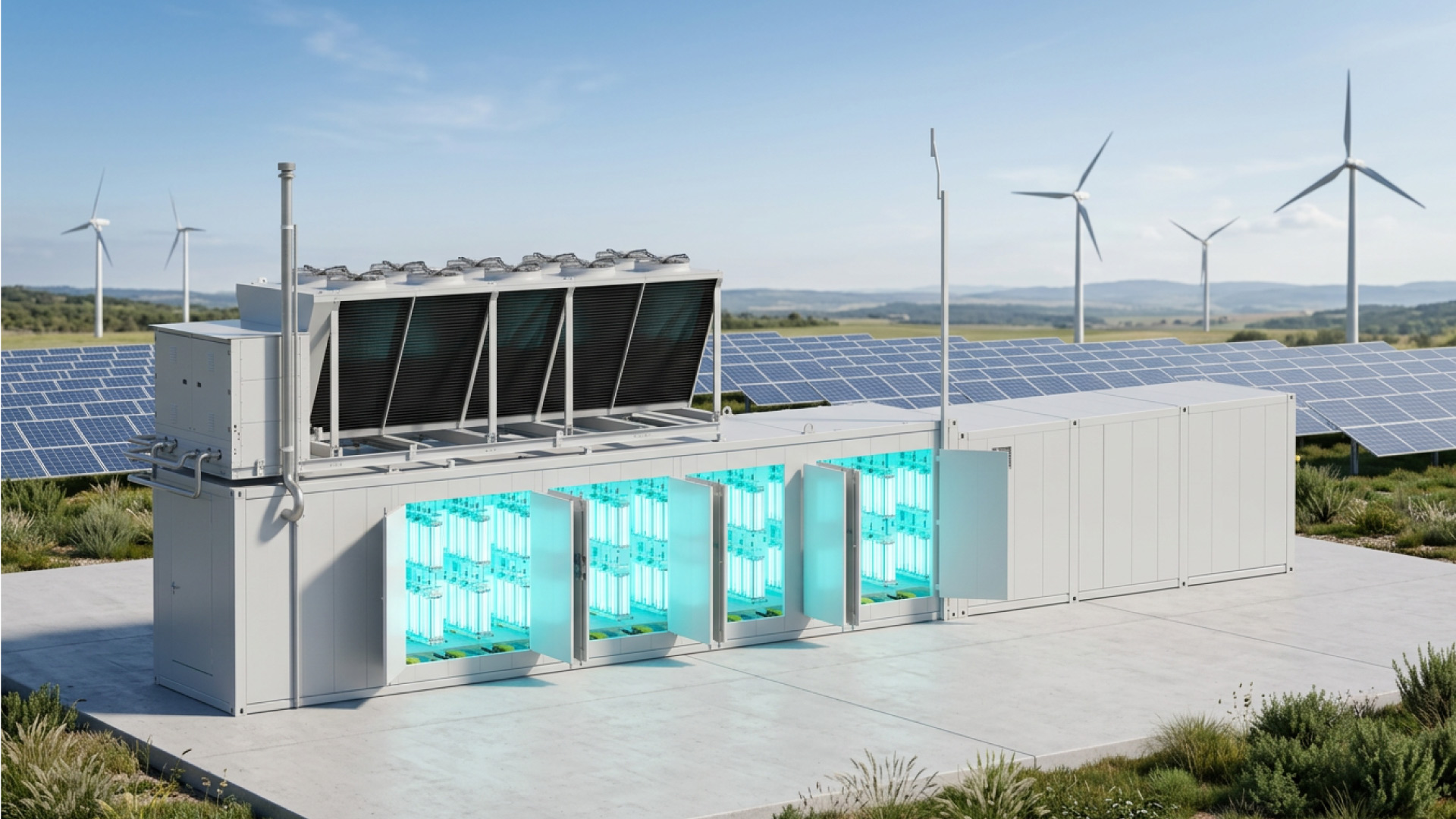
AEM Nexus 2500 in a renewable energy setting. Background AI-generated.
From stack to hydrogen production system
The Stack 25 offers a closer look at the technology at the center of this approach. From the stack itself to the wider system architecture, Enapter’s modular approach is designed to support hydrogen production as project requirements grow.