Scaling matters
Growth is built on proven performance.
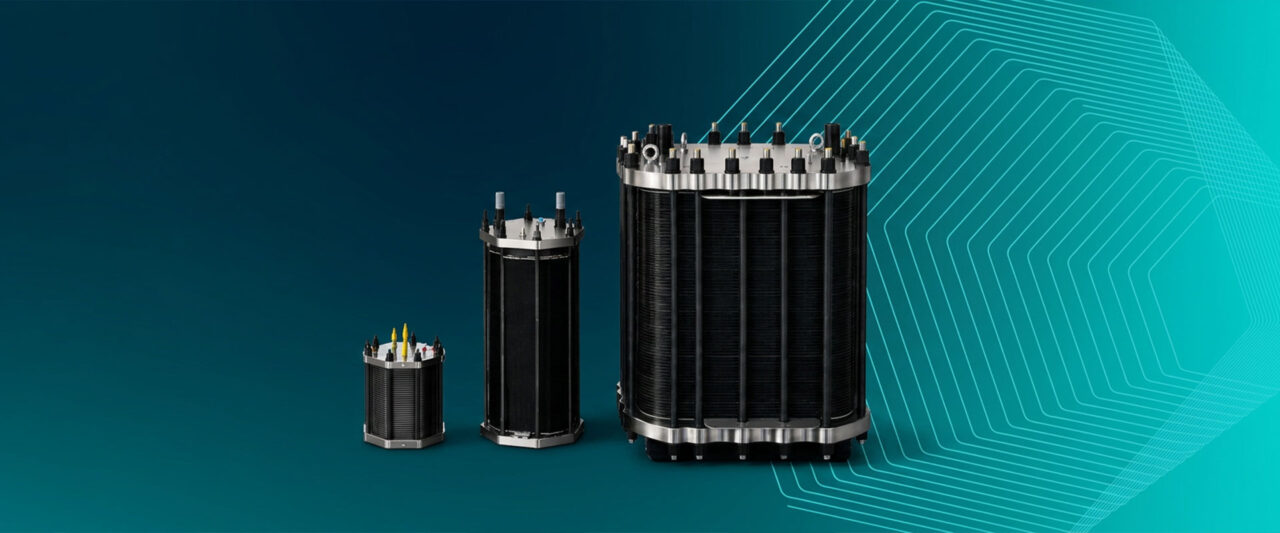
As hydrogen projects grow in size and complexity, scalability is becoming one of the industry’s most important questions.
But scalability is not defined by bigger systems alone. It depends on whether performance can be maintained as AEM technology moves from development to production, and from pilot projects to industrial deployment.
Stack 2.4
For Enapter, that foundation was established with Stack 2.4. Thousands of stacks have been deployed in the field, with individual customer units exceeding 10,000 operating hours and millions of operating hours accumulated across the installed base.
This field experience provided the foundation for scaling AEM technology to the next generation.
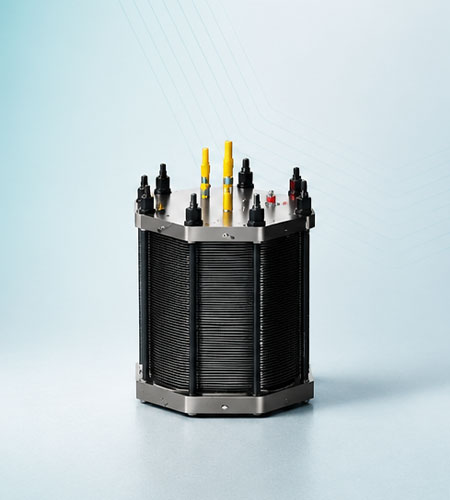
Enapter AEM Stack 2.4 – Thousands deployed. Millions of cumulative operating hours.
Stack 25
Commercial production has started, the first stacks have been delivered, and performance remains consistent with previous generations.
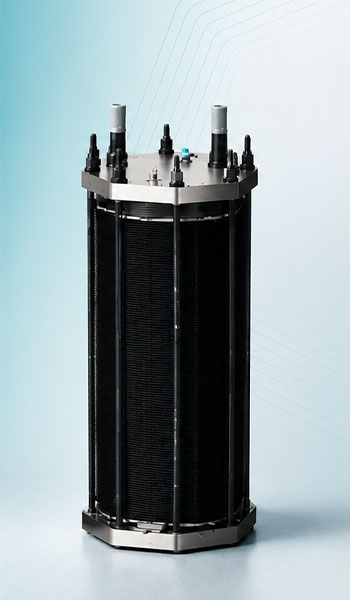
Enapter AEM Stack 25 – Growth continued. Performance kept pace.
Stack 250
Building on this foundation, Stack 250 represents the next scale class of AEM electrolysis.
Producing around 100 kg of hydrogen per day, Stack 250 opens the door to large-scale AEM installations and hybrid hydrogen plants that combine flexibility with industrial-scale production.
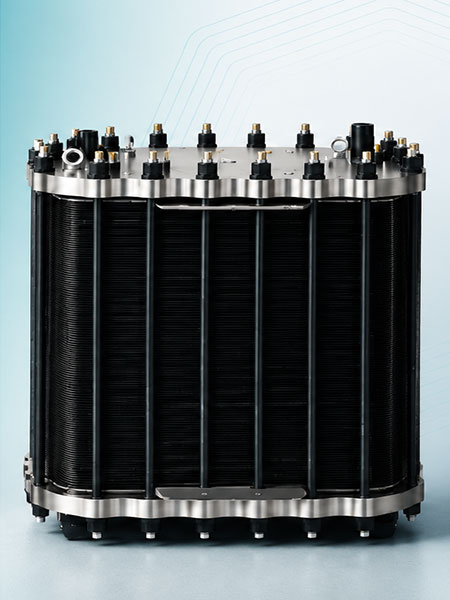
Enapter AEM Stack 250 – ~100 kg H₂/day
The lesson is straightforward.
Industrial deployment does not start with larger projects.
It starts with technology that consistently delivers proven results as it scales.
Ready to scale hydrogen production?
If you are currently assessing how to scale hydrogen production in practice, we are happy to exchange perspectives.